Authors

Economics

The End of Politics and the Birth of iDemocracy

The West is in crisis.  Our Big Government way of doing things does not work.  It is no longer going to be possible to run a burgeoning welfare state on the back of a shrinking wealth-creating base.

For several generations, officialdom has been able to divert ever greater resources toward officialdom by concealing the costs of extra government.

How? Partly through unequal taxation, and partly by manipulating the money.

Taxation is, in the words of Louis XIV’s finance minister, Jean-Baptiste Colbert, the art of “plucking the goose as to obtain the largest amount of feathers with the least possible amount of hissing”.  Too much hissing, and the king might lose more than the extra revenue.

The introduction of so-called progressive taxation a century ago enabled the governing elite to extract more feathers from a minority of geese at any one time, confining the hissing to a few.  Government has grown every decade since.

Since 1971 Western governments have lived beyond the tax base by manipulating the money, transfering wealth from the governed to the governing without many voters even noticing.

Indeed, Western finance ministers meet regularly in order to discuss the rate at which they internally devalue their currencies such that they might ensure the external consequences are manageable.

The trouble is that these pillars on which the Big Government model rests – unequal taxation and money manipulation – are starting the crumble.

The digital revolution will redefine money.  Instead of having to live under monopoly money regimes, we will have currency competition.  Governments simply won’t be able to keep on debasing the currency at our expense.

In the digital economy of the future, taxes will, I argue, need to be much flatter.  A consequence of flatter taxes is that even quite modest attempts at plucking us for more taxes will be met with a great deal more hissing.

The digital revolution will  reinvigorate the West, lifting us out of our Big Government induced stupor.

Douglas Carswell is Conservative MP for Clacton. His book The End of Politics and the Birth of iDemocracy is published by Biteback

Economics

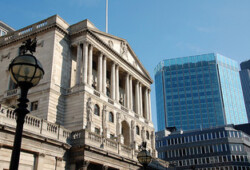
The economic consequences of central bankers

More unemployment.  More recession.   More massive public debt.  More print-more-money-and-pray quantitative easing.

More Mervyn King bleating on about the stalled economy – but failing to explain why he has missed his inflation target for years.

What passes for economic “debate” in Britain today is between those who still believe monetary stimulus is the way to engineer growth versus those who say we need fiscal stimulus.

Each time more monetary stimulus fails to produce prosperity, the fans of fiscal stimulus say we need to spend more. Each time public debt gets a little bit less manageable, those who favour monetary stimulus claim it is they who are right.

But what if they are both wrong?

If central bankers knew how to make us wealthy, the West would be booming.  Instead, having handed them the macroeconomic controls, we find ourselves trapped in a decades long spiral of debt and stagnation.

It was attempts by central bankers like Mr King to engineer growth through monetary manipulation that landed us in this mess to start with.  Further monetary stimulus today can no more restore us to prosperity than fiscal stimulus was able to in the 1970s. Debauched monetarism is no more the answer than debauched Keynesianism.

If you cannot engineer growth from on high, who in Whitehall is working on plans to set the economy free to grow from below?

What “winter of discontent”-style event might it take to prove that we need something altogether bolder and more radical than the current bankrupt orthodoxy.

This article was previously published at TalkCarswell.com