The Cobden Centre - For honest money and social progress For honest money and social progress
  • Home
  • Articles
  • Literature
    • Primer
    • Download
    • Bookstore
  • Links
  • Contact us
  • Sign up
  • About
    • Our Vision
    • Our Approach
    • Our Team
    • European Fellows
    • Academic Fellows
    • Our Advisory Board
    • Our Thanks
    • PRIVACY POLICY
  • Donate
Dr Frank Shostak

Dr Frank Shostak

Dr Frank Shostak is a leading Austrian economist and director of Applied Austrian School Economics Ltd, which aims to assess the direction of various markets using the Austrian School methodology. AASE aims to make Austrian economics accessible to businessmen.

Economics1 April 20<30 March 20

Cost cutting and economic growth

  Some commentators regard cost cutting by companies in order to secure profits as a major threat to the economy. They hold that if…

Read More
Economics9 March 20<9 March 20

The questionable role of quantitative methods in economics

Most economists consider the use of sophisticated mathematical and statistical methods key towards understanding the complexities of economics. They are of the view that…
Read More
Government budget deficit and economic growth
Economics6 March 20<1 March 20

Government budget deficit and economic growth

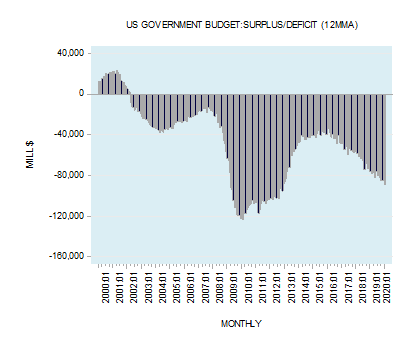
  The US budget had a deficit of $32.6 billion in January compared with a deficit of $13.3 billion in December and a surplus…

Read More
Economics28 February 20<24 February 20

Why banks are not lenders as such?

  According to the popular way of thinking the subject matter of lending is banking activity. It is banks, so it is held that…

Read More
Economics17 February 20<17 February 20

Why US productivity data is questionable

  According to the US Labor Department, workers productivity in the non-farm sector increased at an annual rate of 1.4% in the fourth quarter…

Read More
Economics14 February 20<10 February 20

Expectations and economic growth

  In various writings, Milton Friedman argued that there is a variable lag between changes in money supply and its effect on real output…

Read More
Economics28 January 20<28 January 20

Why more money can’t generate economic growth?

  The view that more money can revive an economy is based on the belief that money transmits its stimulatory effect through aggregate expenditure….

Read More
Economics21 January 20<21 January 20

Why assessing business cycles using the NBER approach is questionable

Most economists are of the view that by means of economic indicators it is possible to identify early warnings regarding an upcoming recession or…

Read More
Economics17 January 20<11 January 20

Should forecasting accuracy determine the acceptance of a theory?

  In order to establish the state of the economy economists employ various theories. Yet what are the criteria for how they decide whether…

Read More
Economics8 January 20<6 January 20

Do we need government to promote innovation and economic growth?

  According to Mariana Mazzucato, the RM Phillips Professor in the Economics of Innovation at the University of Sussex, government is an important factor…

Read More
Posts pagination
1 … 14 15 16 17 18 … 40
February 2026
M T W T F S S
 1
2345678
9101112131415
16171819202122
232425262728  
« Jan    

Categories

Tags

100% reserve banking Austrian School Bank Credit Banking Bank of England Ben Bernanke blog Central Banking China deflation ECB Economic Cycles Economics Essentials Euro F A Hayek Federal Reserve Financial Stability Fractional Reserve Banking Free trade GDP Gold gold standard Greece Honest Money Huerta de Soto Inflation Insight Keynes Keynesianism King World News Lending Markets Mises monetary policy Money money supply Paul Krugman Peter Schiff Quantitative Easing Reform Regulation Risk Sean Corrigan Sovereign Debt
Powered by WordPress. Created by ThemesIndep
Back to top
  • Home
  • Articles
  • Literature
    • Primer
    • Download
    • Bookstore
  • Links
  • Contact us
  • Sign up
  • About
    • Our Vision
    • Our Approach
    • Our Team
    • European Fellows
    • Academic Fellows
    • Our Advisory Board
    • Our Thanks
    • PRIVACY POLICY
  • Donate