Authors

Economics

Strippers and bankers’ just rewards

There are many times when working alongside the TCC team I have to smile.

Having read a City AM article by our own Dr. Jamie Whyte earlier the morning I hope this makes you smile too.

Enjoy!

Economics

TCC doubles its media coverage since September

Earlier this morning I updated The Cobden Centre’s media page. Since September we have not only again doubled the volume of our coverage but its quality continues firmly on an upwards trajectory. Slowly but surely, bold Cobdenite messages are becoming part of legitimate discourse. While we still have a long way to go, the following link highlights welcome progress. Enjoy!

Press

Sean Corrigan on CNBC

Sean Corrigan is a good friend of TCC. Yesterday, he appeared on CNBC where he provided a masterful overview of current events on the markets. You can see him in action here.

Economics

The Jewish Chronicle publishes an article on MA

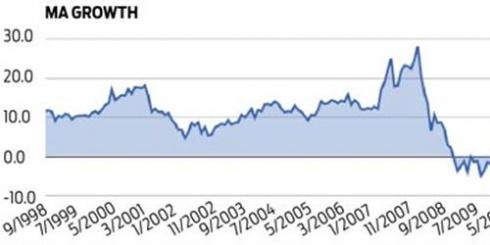
Via Honesty is best policy | The Jewish Chronicle, I set out MA, the Austrian measure of the money supply developed by Dr Anthony J Evans and Toby Baxendale:

Ask economists how much money there is and you will get many answers. You know money is what you can exchange for real goods and services, but economists often include things like time deposits, which cannot be spent because they have fixed terms. Money is one half of every transaction, so its supply really matters. According to my colleague Dr Anthony J Evans of Kaleidic Economics, the Bank of England’s preferred measures, “Narrow Money” and “Broad Money”, are either too narrow or too broad. From the perspective of the Austrian School of Economics, Anthony, together with entrepreneur Toby Baxendale, chairman of The Cobden Centre, has established and now publishes a different measure which they call “MA”. A chart (see above) of the growth of MA shows a pattern that is not visible in the Bank of England’s measures.

Given a good measure of the money supply, we shouldn’t be surprised that our economic and financial troubles continue.

Please see the full article for more and Kaleidic Economics for the data and explanation.

Economics

TCC Senior Fellow in today’s Wall Street Journal Europe

Today is the fortieth anniversary of US President Richard Nixon closing the gold window and bringing in for the first time in history a global system of unconstrained paper money under the full control of the state. To mark this sorry episode TCC Senior Fellow, Detlev Schlichter, has published a superb article in today’s Wall Street Journal Europe headed ‘Forty years of paper money: fiat currencies always end with hyperinflation and economic collapse’.

The article is well worth a read and my prediction is that you are going to hear a lot more about Schlichter in the months and years ahead. Indeed, some years from now, people are going to realise that his forthcoming book, Paper Money Collapse: The Folly of Elastic Money and the Coming Monetary Breakdown, is one of the seminal economics works of the early part of the twentieth century. Out next month, why not reserve your copy here?

Economics

Apparently the BBC is having a bit of an Austrian boom

As I understand it, BBC Radio 4 bosses liked the recent Keynes versus Hayek debate so much that they are now planning to repeat it at 9am on Tuesday 23rd August. My understanding is that this repeat broadcast will probably add another 1.5 million listeners to the 1 million who already heard it the first time around. Perhaps part of this decision has been driven by the fact that the programme’s podcast was in the iTunes and politics top five in the UK.

Press

Two sound articles chime with TCC

There are two excellent articles in today’s press. The first is in written by Ambrose Evans-Pritchard and appears in the Daily Telegraph. It is headed ‘Return of the Gold Standard as world order unravels’. This piece has also been picked up by friends at Samizdata.

The second article is by the very clever Allister Heath and appears in this morning’s City AM. It is headed ‘Media failing public in many ways’.

Press

Steve Baker in Jewish Chronicle

The current edition of the Jewish Chronicle has a sound article by TCC board member Steve Baker. Headed ‘Injustice to banking’ it covers one of the least understood yet most damaging aspects of the financial crisis, namely, “the way International Financial Reporting Standards (IFRS) mislead UK and Irish banks and their stakeholders about their true financial positions”. You can read the article here.

Economics

Business First Magazine

This article originally appeared on stevebaker.info.

Business First Magazine has published a cover story by me and my Cobden Centre colleague Robert Sadler, It’s not enough to bash the bankers.

In the article, we argue that the collapse of the present banking orthodoxy is inevitable. So-called “quantitative easing”, plus the inflationary combination of central banking with fractional reserve deposit taking is unjust and we should insist that banks operate according to the same commercial principles as any other business.

You can read the article here.

Economics

The ghost of Molinari is alive and well and in the Wall Street Journal

I have just stumbled across this excellent article in the day before yesterday’s Wall Street Journal. It is not only a good read but, for me personally, a real delight.

You see the author, Valentin Petkantchin, is an associate researcher at the Institut economique Molinari (IEM) the Francophone free market think tank set up and directed by a TCC Senior Fellow, Dr. Cecile Philippe. When I lived in Brussels between 2002-2005, I worked hard to support Cecile get the IEM off the ground.

Very much the product of the Austrian School of Economics and in particular the Ludwig von Mises Institute in the US, Cecile and her French speaking colleagues are now achieving great success. Crucially, they are committed to not only promoting sound scholarship far and wide, but they are busy reconnecting the French-speaking world to its own heritage. This is no easy task because for too long, Bastiat, Turgot, Constant, Molinari – to name but a few – have been ignored. And this has meant that French students have been taught that free markets are somehow an Anglo-Saxon conspiracy.

If you speak French and have the time then have a look around the IEM site. You will not be disappointed.